How often do you get to venture into the western expanse of the Central African Republic and spend time with Pygmies? Well, I’m very lucky and actually get paid to make trips like this. Recently I was in the region adjoining the Cameroon border known for its indigenous Pygmy tribes.
So what do I know about Pygmies (I’m from Vermont)? I’d guess that many of us who grew up with Walt Disney and National Geographic have certain stereotypes about Pygmies. The grass skirts, nomadic lifestyle, small bones piercing the lower lip; and how about cannibalism and the odd shrunken head or two. Of course, a Pygmy was going to be short. They are tiny people with proportional features who, due to years of evolving under the lush, triple canopy forest, teeming with life, had robustly adapted to an environment I’d last about a week on my own in.
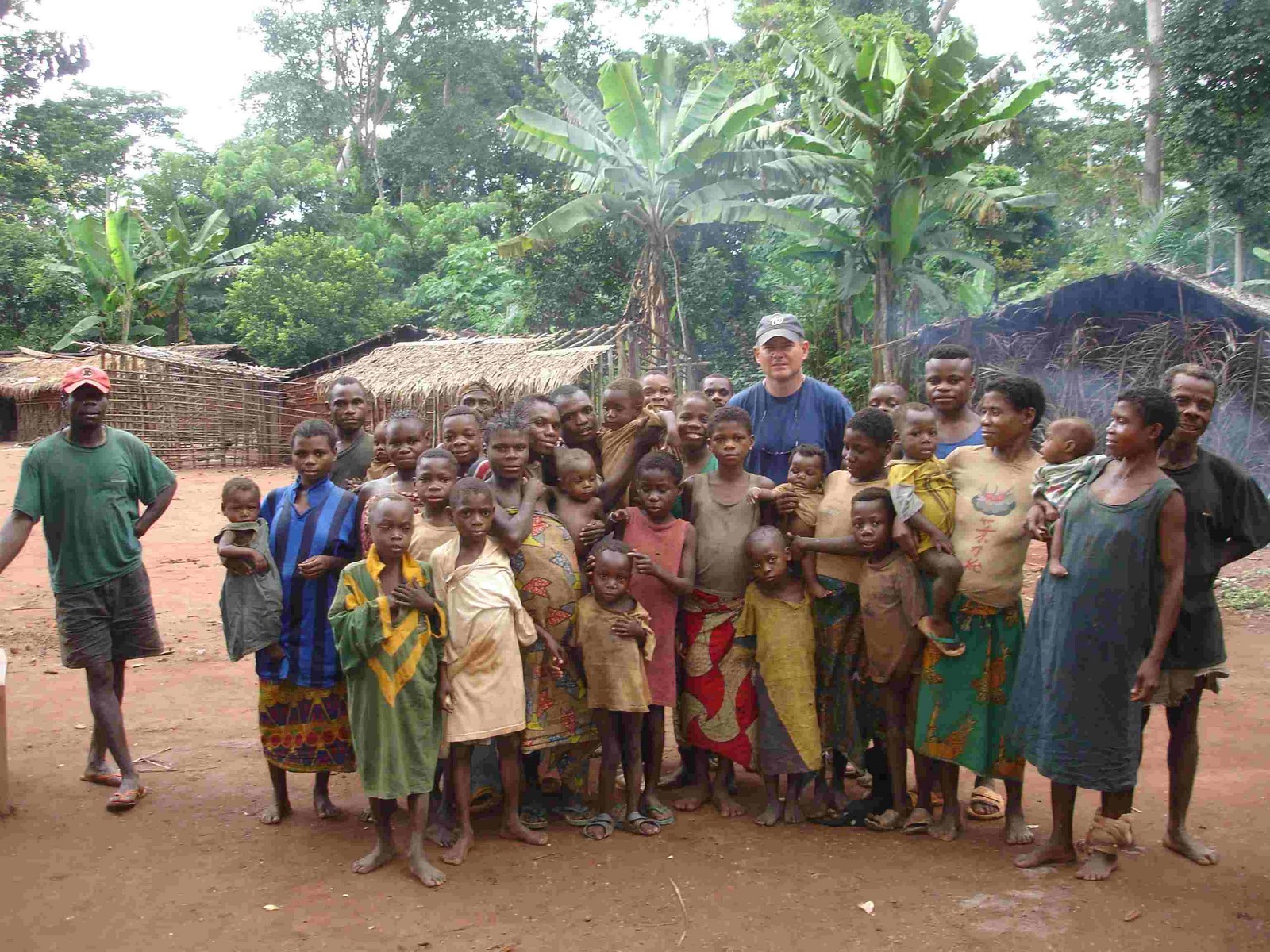
But the truth, as usual, is far different from the stereotype. After a trek through the jungle and arriving in a settlement, I found something quite a bit different than I had expected. No bones in the lips, no shrunken heads, and the grass skirts had been replaced by second-hand clothing donated from western Missionaries. Much of the rainforest I had anticipated had been plowed under for planting cotton or corn, and there was little evidence of wildlife outside of the constant mosquitoes. The people I found were short, but not really that short, and far from what I had expected.
The Pygmies I met in the Central African Republic are a wonderful and hospitable group. Count the number of places you can walk into totally unannounced, be greeted warmly, taken into homes, fed, and are welcome to hang around as long as you want despite being a total stranger? Would the same behavior be reciprocated to my hosts in rural Vermont (….eventually I’m almost sure)?.
What I discovered was that modern influences had encroached on the Pygmies just enough to change an indigenous lifestyle into good old African poverty. The people I met told me they had no money to buy medicines for malaria, that their children got sick due to drinking contaminated water, and several times a year they couldn’t find enough food in the forest (or through planting) to feed their kids. Their lives looked difficult to me, even by Central African standards.
But before looking to pass the blame on something or someone, you have to ask yourself what life was like in the forest before the outside world “collided” with the Pygmies. Did they previously have a life expectancy greater than the current 39 years? Were they immune to malaria, HIV/Aids, or some other viral disease that regularly burns through the region? Was their stunting a recent phenomenon due to self-inflicted environmental degradation and diminished local food supply?
I think the truth is that the Pygmies have always had it tough out there in the forest. This romantic “Heart of Darkness” ideal we carry around that “the only problem with the Pygmies is modern encroachment” really doesn’t hold water. Before I left the village, I had my translator ask the Chief why he just didn’t pack up and move into the woods another 100 kilometers in search of paradise. He smiled at me and said, “then where would I get the quinine to treat my kids when they catch malaria?” I hear you Chief!
aldwyer

 What Next?
Leave a comment