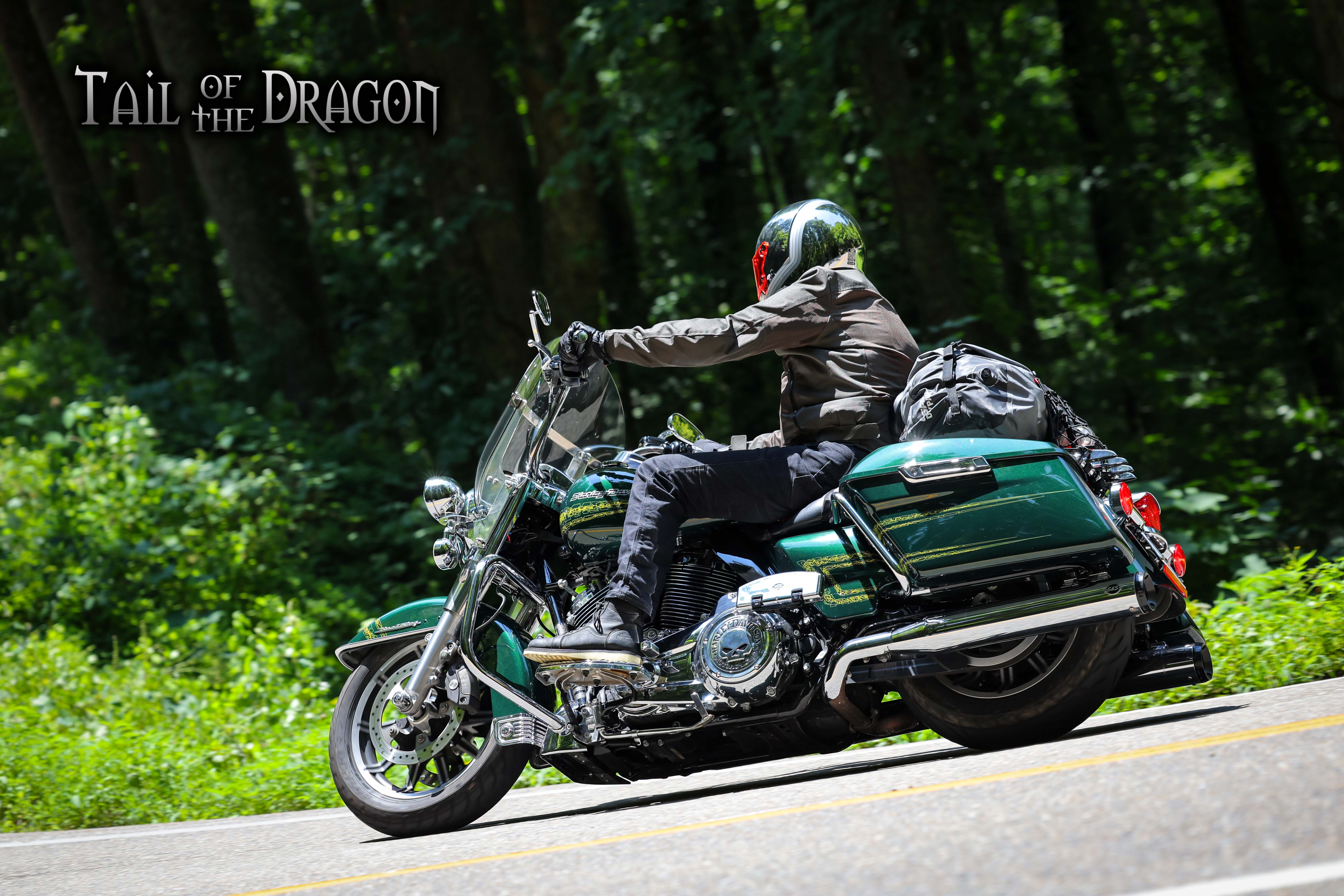
That “someday” finally came. Throughout my working career, the dream of touring the United States on a Harley was always a someday fantasy. Unfortunately, living abroad with time-constrained “home leaves” kept touring America a dream, or maybe just provided me with a convenient excuse. Then retirement came along, and suddenly, time, resources, and the awareness of mortality forced a decision. I’m happy to say, “It got done”
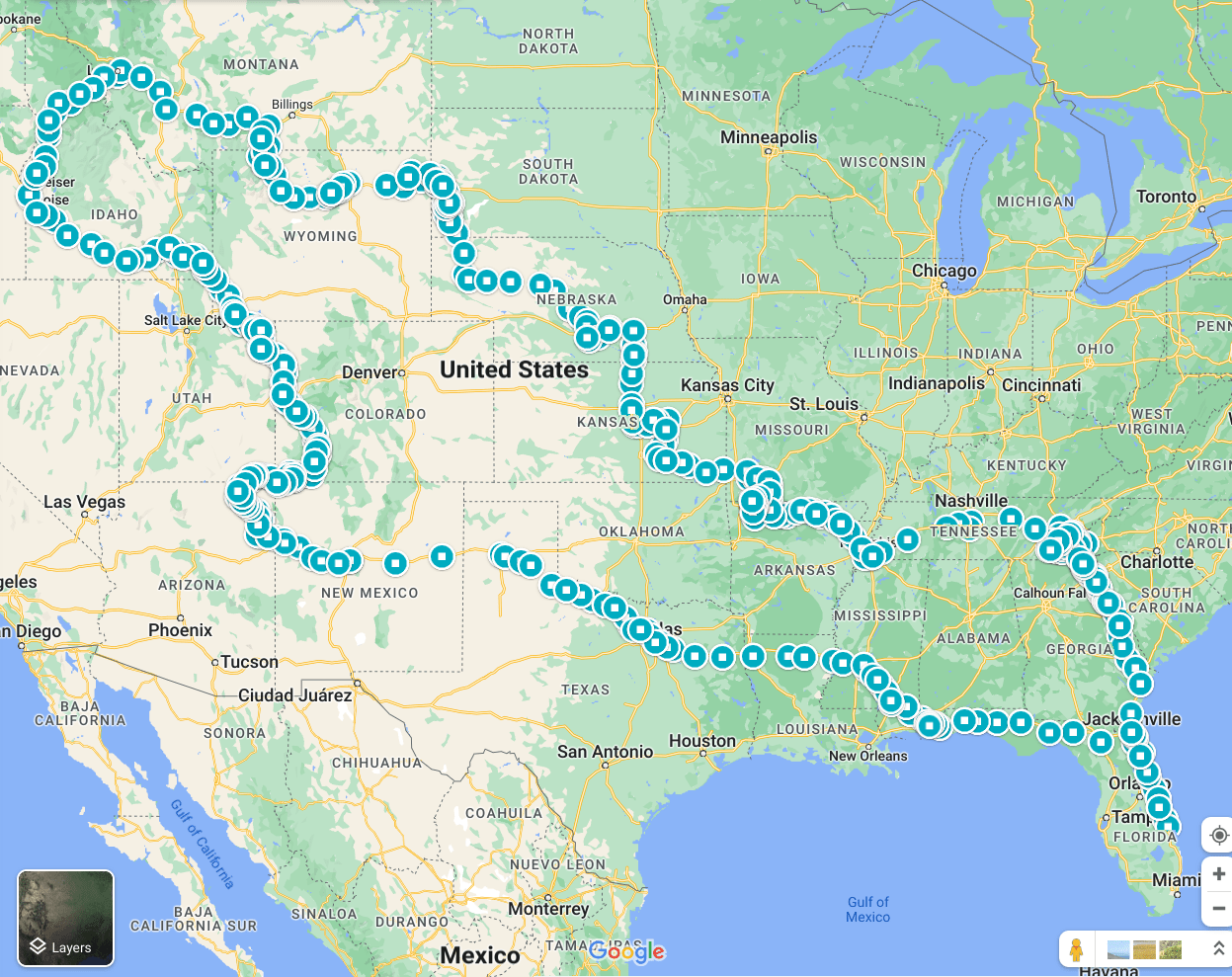
“The Big One” was the name I gave to my 4 months of planning and 2-month road trip around the United States. I would leave Florida on my 2019 Road King sometime in July, meet up with my riding partner Tom in the Midwest, and together we would attend the Sturgis Motorcycle Rally in the Black Hills. After the rally, I would continue alone west through the Rockies, south towards the border, and then back home to Florida along the Gulf. I’d pack for camping or hotels, stay off the interstates as much as possible, and keep things as unstructured as I could.
Riding is only one aspect of motorcycle touring, while having goals to plan against is the other. Attending the Sturgis Rally was the initial goal; however, I decided to include visits to parts of Lewis and Clark’s expedition route and the Oregon Trail in the trip mix. The more reading I did, the more I realized I also needed to include a visit to the Navajo lands, Kit Carson country, and the Texas Comanche trails. Finally, there are several subjective and arguable lists floating on the web of “America’s 10 Best Motorcycle Rides”, so why not add them to the goals as well?
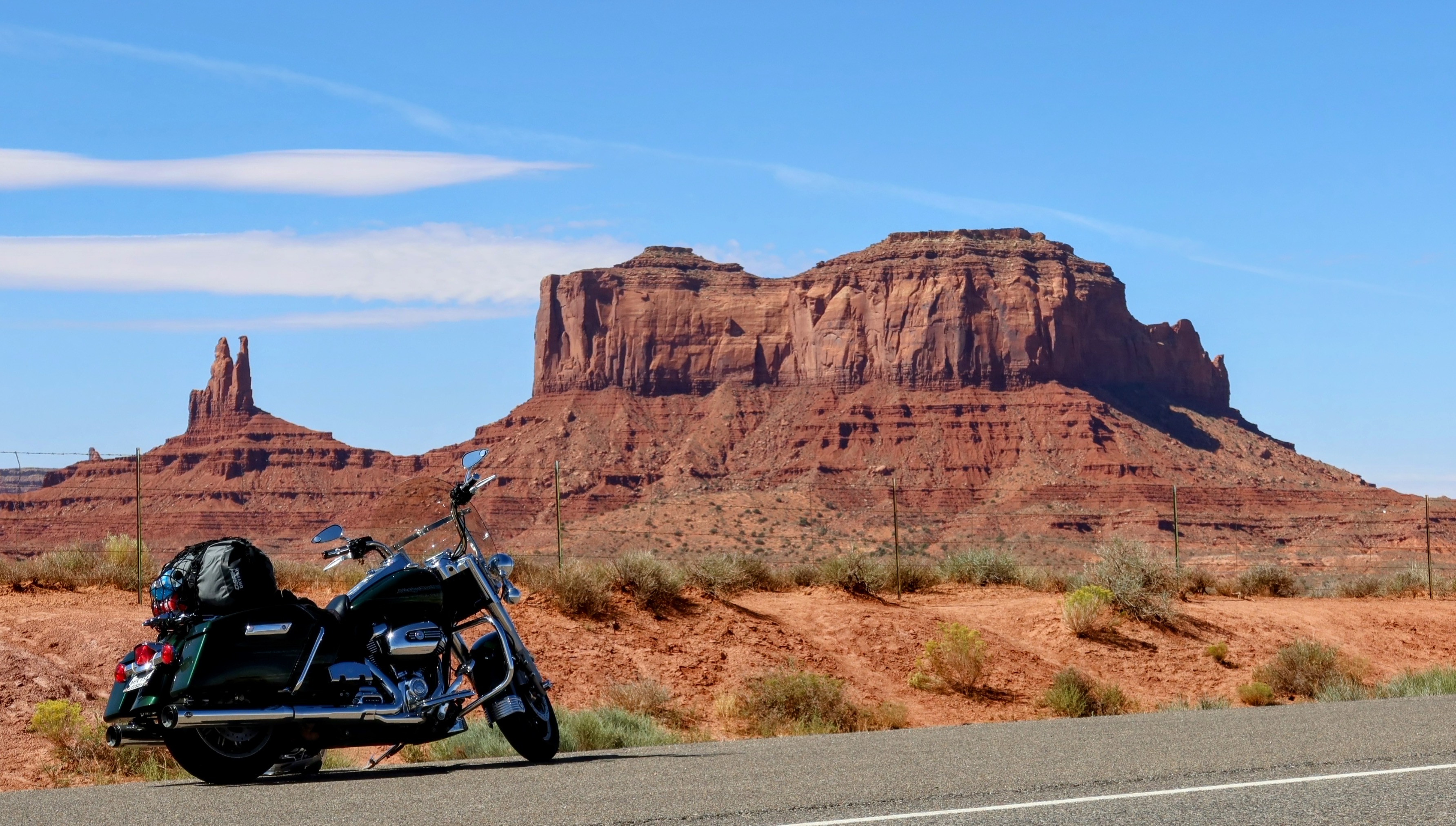
When it was over, I’d accomplished about 95% of my plan. From Appalachia to the Ozarks, through the Great Plains to the Rockies, from Monument Valley through the high deserts to the Gulf. The full range of foods, beer, gas stations, hotels, and campsites. The wonderful people I met, the hospitality I was shown, and the natural and historic wonders of this great country we live in continue to make me proud to be an American. America is the Beautiful, and after living and working abroad for close to 30 years in 100+ countries, this is my truth. The grass is not greener on the other side.
Speaking of truths, I’d say there are two about long-distance motorcycle touring. The first is that it’s physically and mentally tough. Throwing around a 980-pound motorcycle day in and day out in all kinds of weather and terrain is real and demanding. Safety is a game of inches in the saddle, and you need to be constantly sharp. Riding day after day in the summer gets exhausting and unknowingly erodes your abilities. Realize when you need that day off, take it, hide in the hotel, watch TV, eat, and recover. The second truth is that the western United States, including South Dakota, Wyoming, Montana, Idaho, and Colorado, host some of the best natural landscapes and road engineering on earth and are not to be missed. Arizona’s Canyon de Chelly, where Kit Carson ended the Navajo reign, and Montana’s Three Forks, where Lewis and Clark discovered the Missouri River headwaters, stood out as my top non-riding experiences.
So, what was the 5% of the plan that I didn’t accomplish? Glacier National Park and the Highway to the Sun in Montanna. Supposed to be one of the best rides in the country, however, with poor visibility due to the Canadian wildfires, the need for a reservation just to enter the park, and 10 miles of gravel road due to construction, it sounded like an avoidable shitshow. Something for the next trip.
My “America’s Top 10” motorcycle routes
Criteria for the list are road quality, length of ride, technical challenge, traffic, and scenic beauty. Although I didn’t travel to the Pacific Coast this time, I’ve ridden it in the past years, from Baja to Vancouver.
1.) Lolo Pass and White Bird Canyon
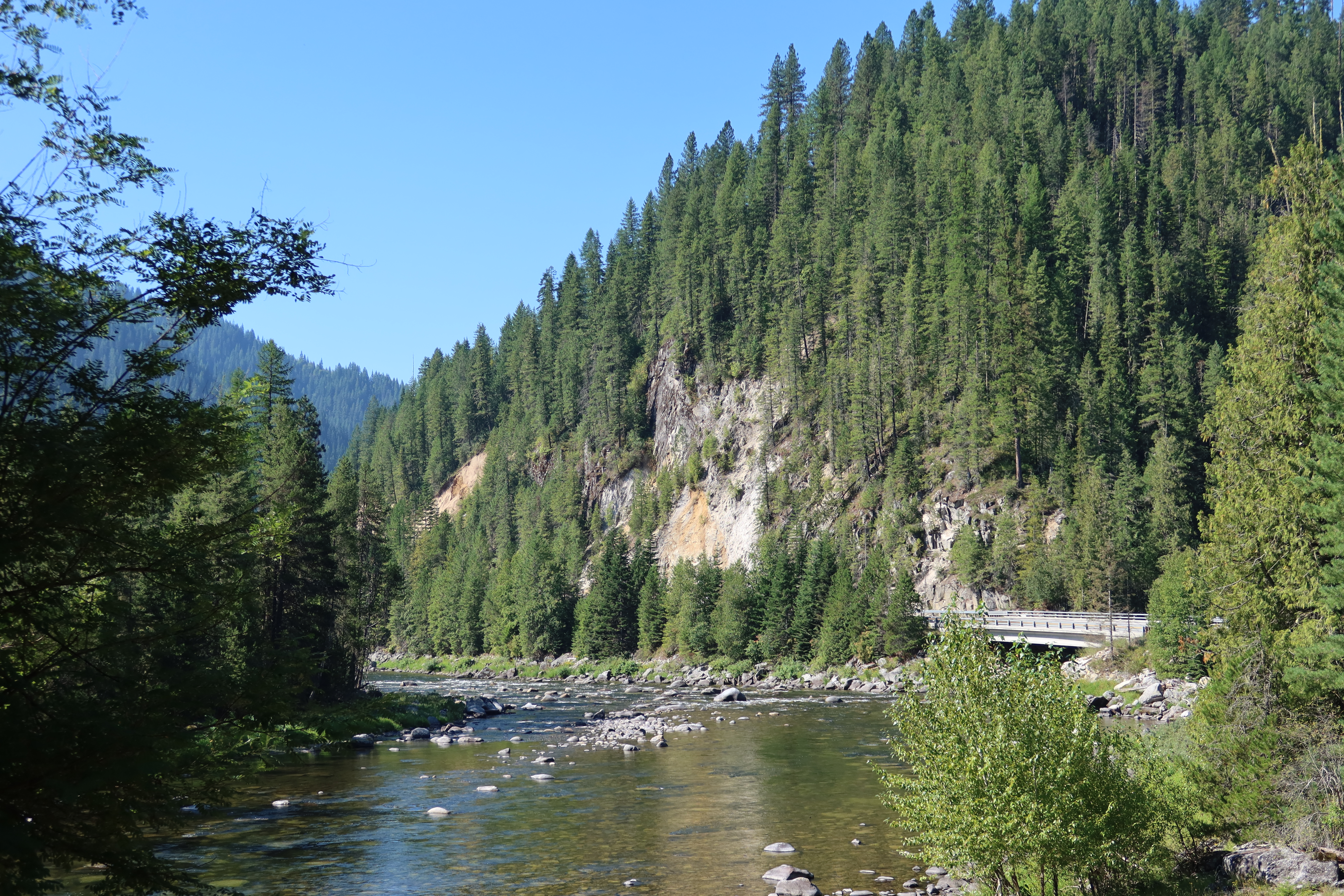
Head west from Lolo, Montana, over Route 12, over the Lolo Summit of the Bitterroot Mountains, and down into Kooskia, Idaho. The notorious 99 miles (no fuel stops) of downhill twists follow the Locsha River and retrace Lewis and Clark’s winter passage of 1805. Spectacular peaks and forests that still look the same as when the expedition passed more than 200 years ago. From Kooskia, drop down over the Nez Peirce Trail and Route 95 to White Bird, Idaho, and the Salmon River Basin. This takes you through high-speed turns on the edge of the enormous White Bird Canyon, where US Calvery and Nez Peirce battled. From alpine frost to scorching desert in 175 miles. The road quality throughout is outstanding. Cons: No gas or services for 99 miles on the Pass.
2.) Beartooth Highway and Chief Joseph Scenic Byway
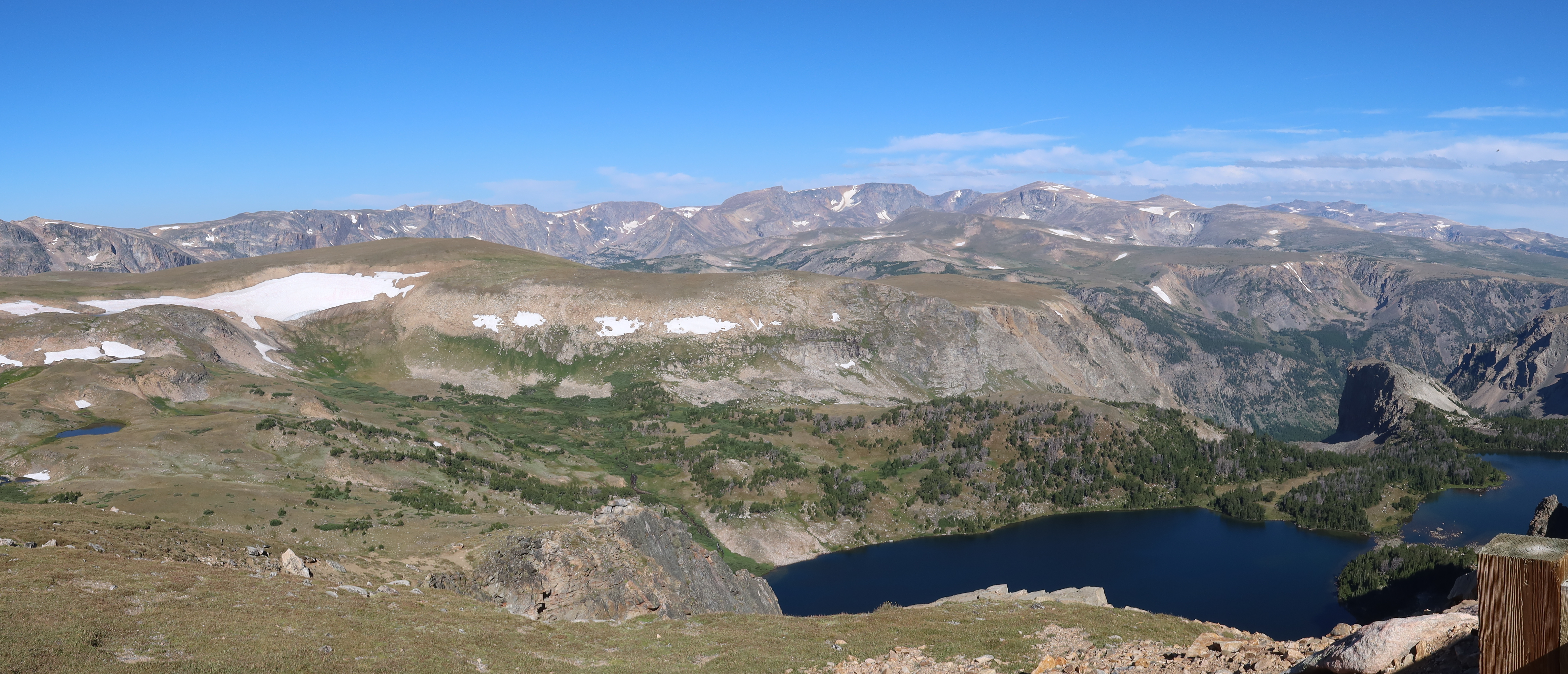
While the Beartooth is lauded as one of America’s best highways, you shouldn’t exclude the Chief Joseph Scenic Byway if you want the full experience. Head south (full fuel) out of Red Lodge Montana on Route 212, and soon the climb begins. Eventually, you poke out above the tree lines, surrounded by unhindered vistas of the Beartooth Mountain Range peaks (Rockies), ice-blue alpine lakes, and snow-white glaciers. The road to the Beartooth Summit (10,947 feet) is only open a few months a year, and the reason is that it’s still winter up there in August. The road quality was good; there were plenty of places to stop, and traffic was light. It was crystal clear the days I rode, so I went back for seconds the following day. From Rt. 212, turn left onto Rt. 296 (Chief Joseph Scenic Byway) and head south towards Cody, Wyoming. It’s the climb and descent through Dead Indian Pass that are as memorable as anything on the Beartooth. The history (trek of the Nez Peirce), endless vistas, colors, and proximity to the rocks and drops make this a ride. It’s about 140 miles total, and both Red Lodge and Cody are colorful places to hole up for the night. Yellowstone National Park is a stone’s throw away to the west. Cons: Very little shoulder at the summit area, with many cars looking to stop for views.
3.) Moonshine 28
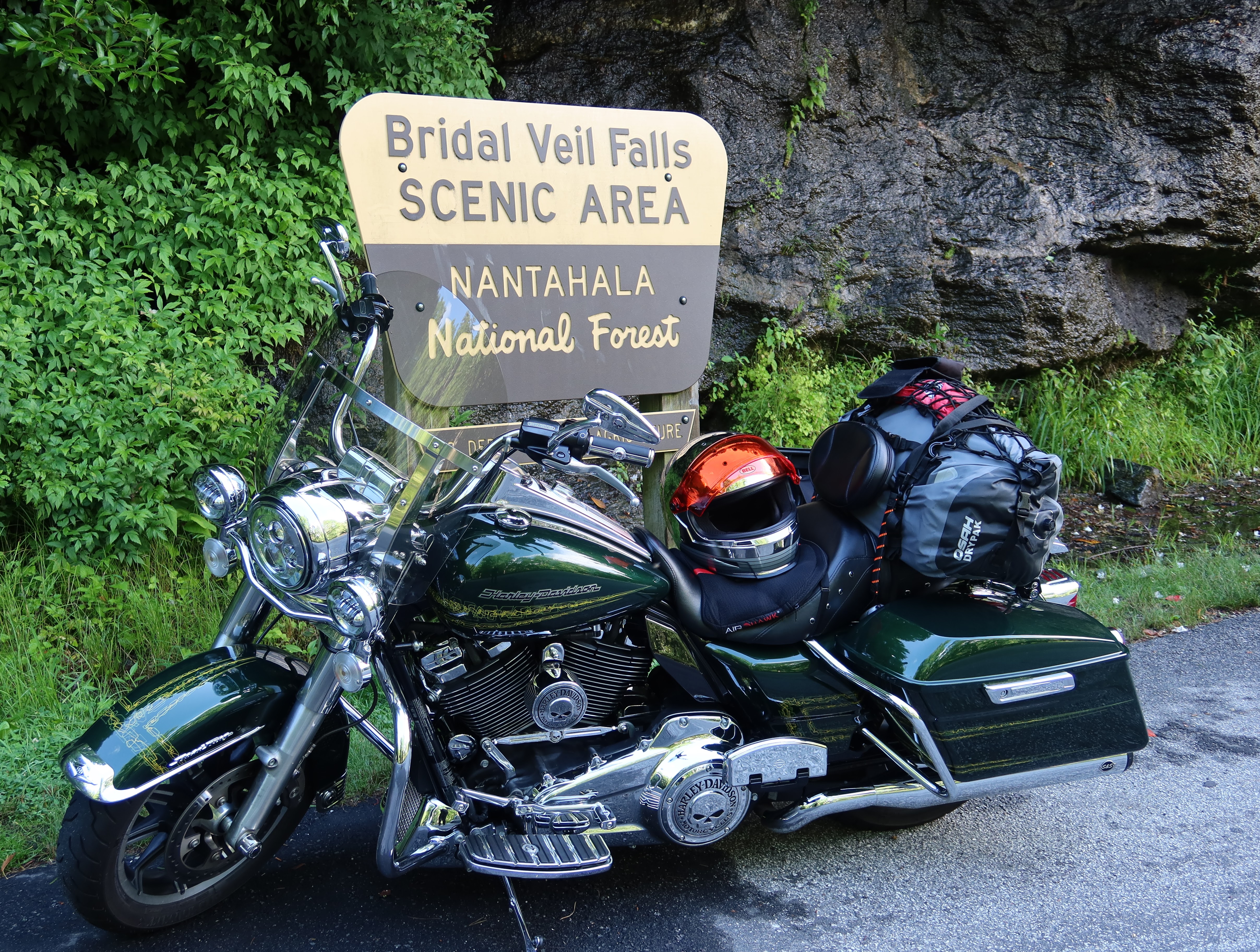
This is the best route for a bike in the Appalachians. It’s 105 miles of the best twisties in what is undoubtedly the best motorcycle playground in the country. Head north on Route 28 out of Walhalla, South Carolina, and follow it to the end at Deal’s Gap, N.C. Up and down, back and forth through the mountains, river valleys, and scenic forests There are plenty of genuine and hospitable towns along the way for gas and eats and traffic is light. Throwing the bagger through the turns on the well-maintained roads tests both the equipment and concentration. Better yet, you end up at the south end of the Dragon. Cons: Lots of dry counties in this part of N.C. Try to stay at the Iron Horse Motorcycle Lodge in Stecoah, N.C.; it’s first-class.
4.) Blue Ridge Parkway
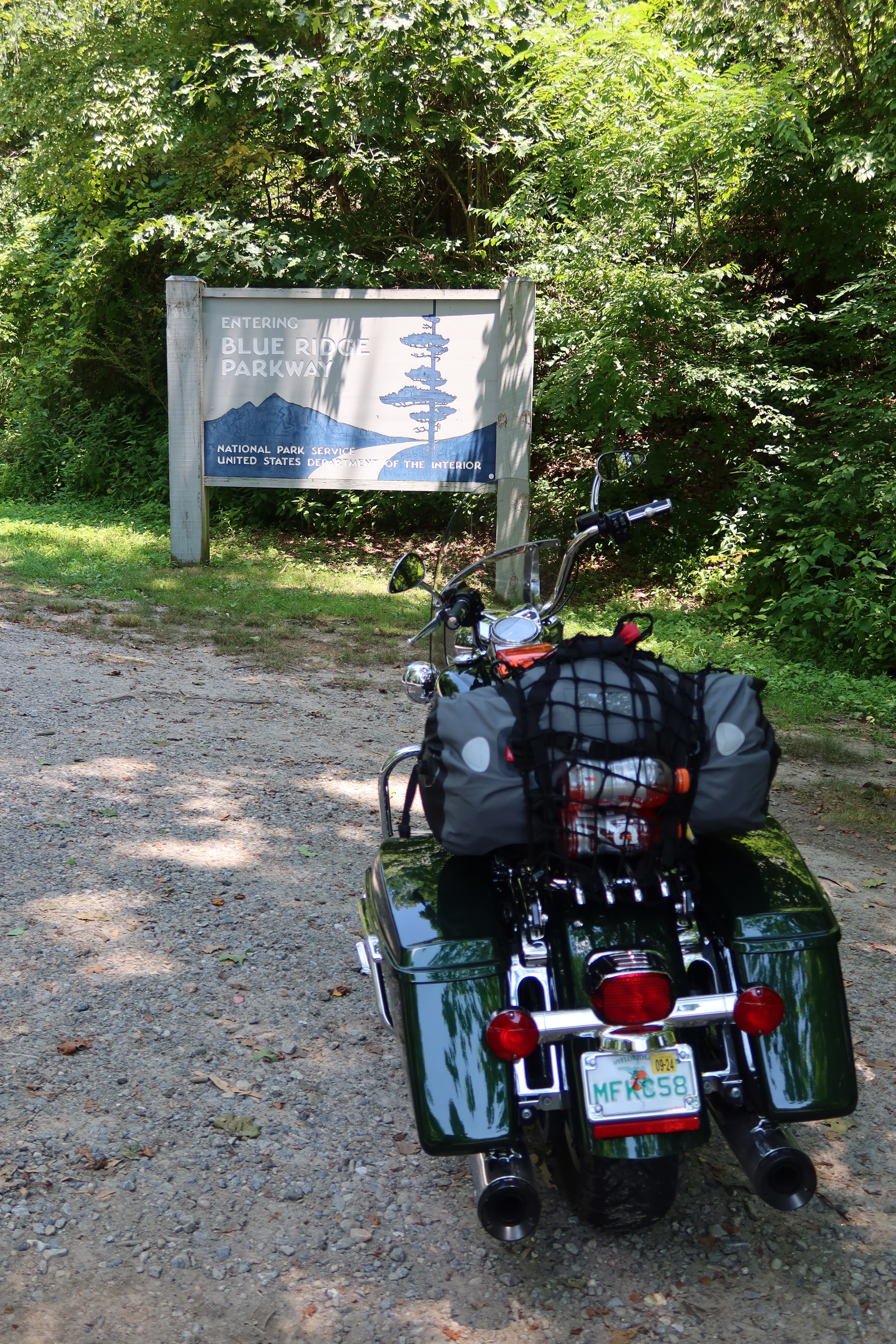
This is a subjective call as my #4, but the truth is, the Blue Ridge Parkway is truly special. With 469 miles of continuous two-lane road, national park care, and limited entrances, it makes for a cerebral and historical ride. If you can’t do it all, do a part of it, but just don’t miss it. Its long, sweeping turns, climbs, and numerous tunnels reverberating with V-Twin exhaust make it a favorite. There are plenty of turn-offs to enjoy the vistas and historical markers of this remote expanse of America. Cons: Deer are prolific along the route, which keeps the cruise control off to remain alert.
5.) Needles Highway and the Black Hills
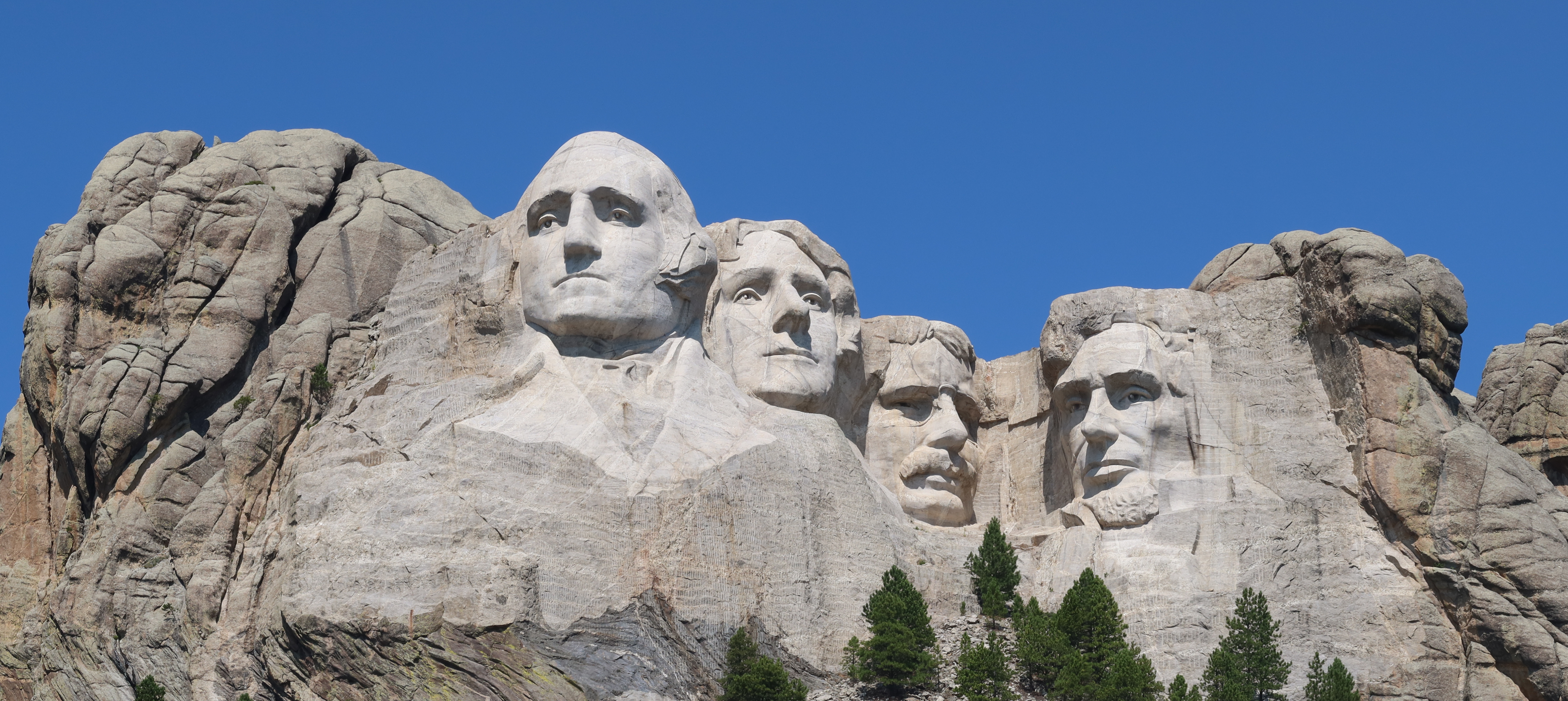
Head north on Route 87 out of Wind Cave National Park to its end, then east on Route 287 past Mt. Rushmore to Keystone, South Dakota (45 miles). There are no bad rides in the Black Hills. The Iron Mountain Road, Spearfish Canyon Highway, or Rt. 385 up to Deadwood—they’re all great. The spectacular rock spirals, dense forest, and lakes—there really is no place like it. The road quality is outstanding throughout. Cons: Riding the Black Hills during the Sturgis Rally. The thousands of bikes all competing for the same pavement make many of the marquee rides seem like you’re on a parade route. Don’t waste your time visiting the Crazy Horse Monument.
6.) San Juan Skyway and Million Dollar Highway
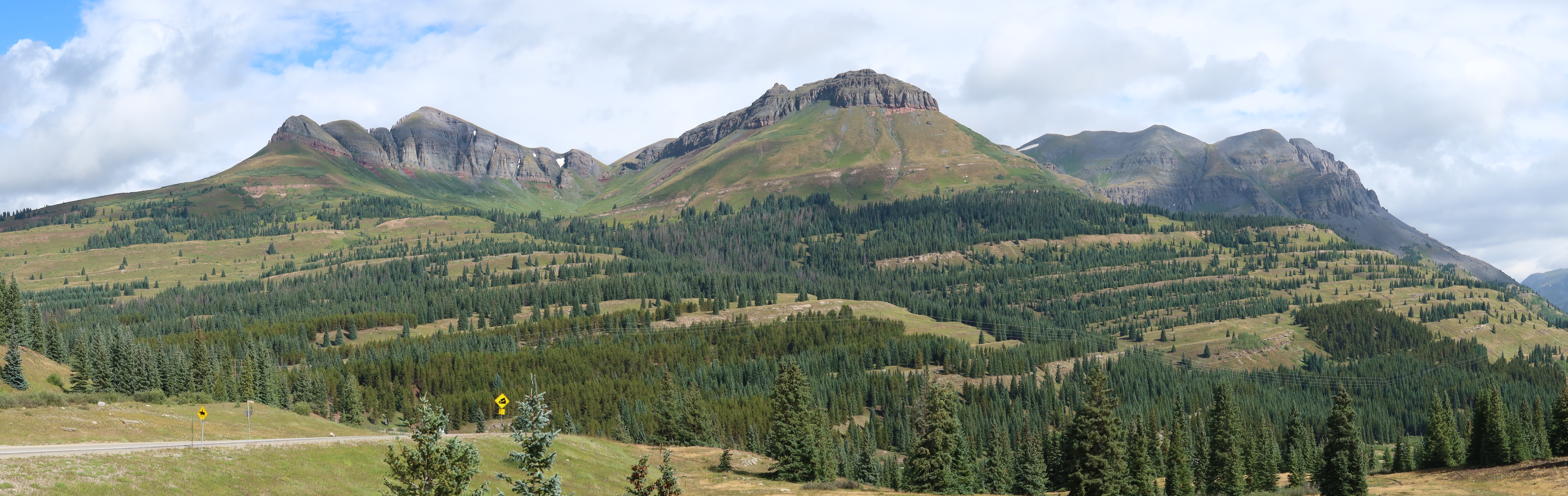
This is Route 550 from Montrose, Colorado, south to Durango. Incredible climbs and drop-offs put you square in the middle of the best of the Rocky Mountains. Some great historic towns along the way (Ouray and Silverton) reflect the area’s mining history. Cons: The route is one of the few north-south in the western part of Colorado. Traffic was heavy, and speeds were slow. Also, the very nature of the route means constant construction and delays.
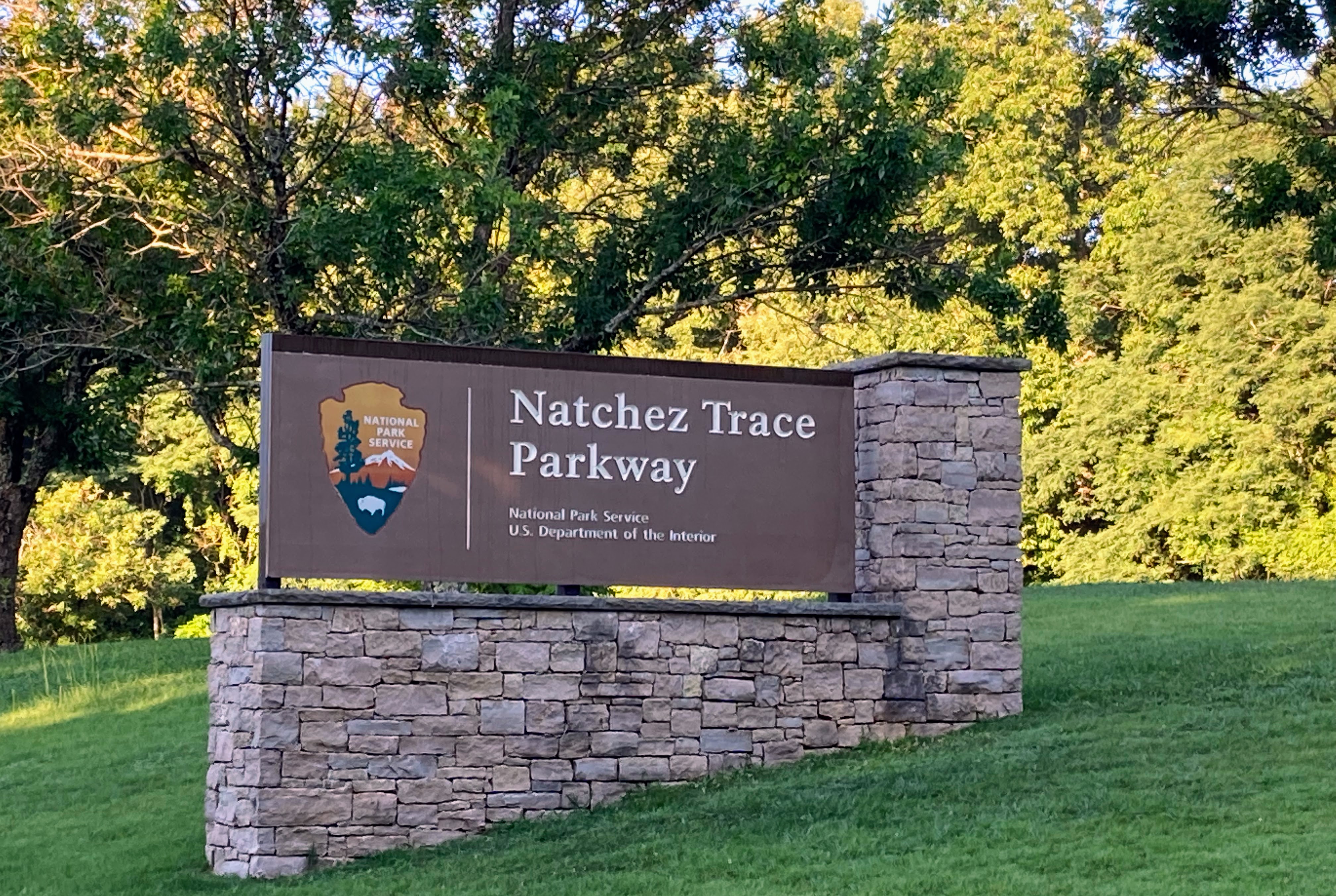
7.) Natchez Trace Parkway
From its northern entrance south of Nashville, Tennessee, through Alabama, to its terminus in Natchez, Mississippi, this 444-mile stretch of national park-maintained 2 lanes is touring at its best. Similar in composition to the Blue Ridge, less the altitudes, It’s another national treasure. Oozes with southern history that is well mapped out, including the final resting place of Meriwether Lewis. Cons: It’s the south; it’s hot, and that warm air coming off the jugs means you need to plan stops.
8.) Cherohala Skyway and the Dragon
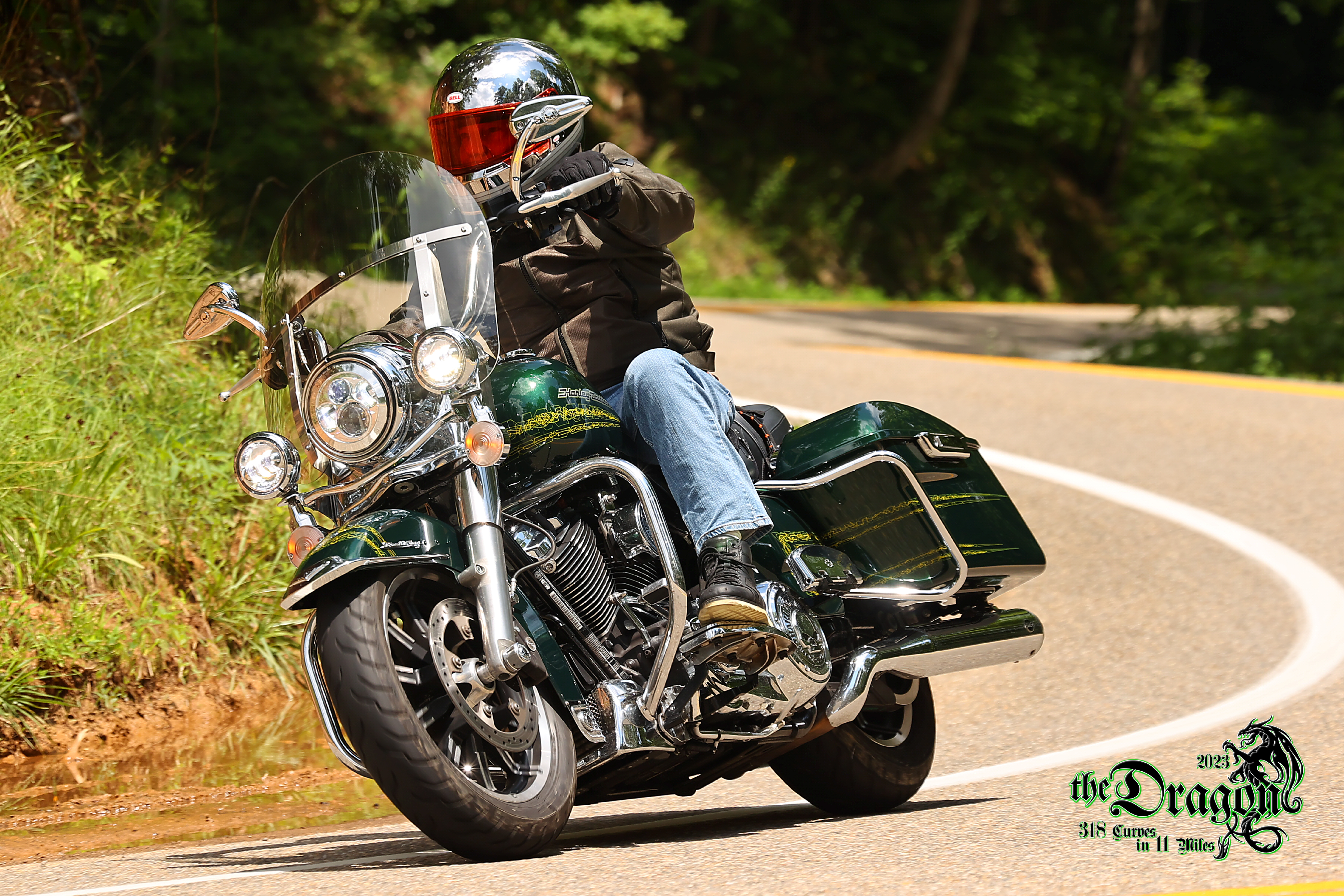
From Tellico Plains, Tennessee, follow Rt. 165 (which becomes Rt. 143 in North Carolina), then north on Rt. 129 until you hit the Harley-Davidson Dealership on Chilhowee Lake (74 miles). The Cherohala is a mini “Blue Ridge Parkway,” but a bit more technical, and the Dragon, well, it’s the Dragon. I do love the Dragon. Probably the most famous motorcycle route in the US for its 11 miles and 318 curves. If you throw a bagger through it at speed, you’re a rider, no doubt. Cons: The Dragon. You must do it, but it’s likely that you will be sharing it with superbikes, sports cars, boat trailers, and RVs alike. It’s a circus on the weekend, but still fun.
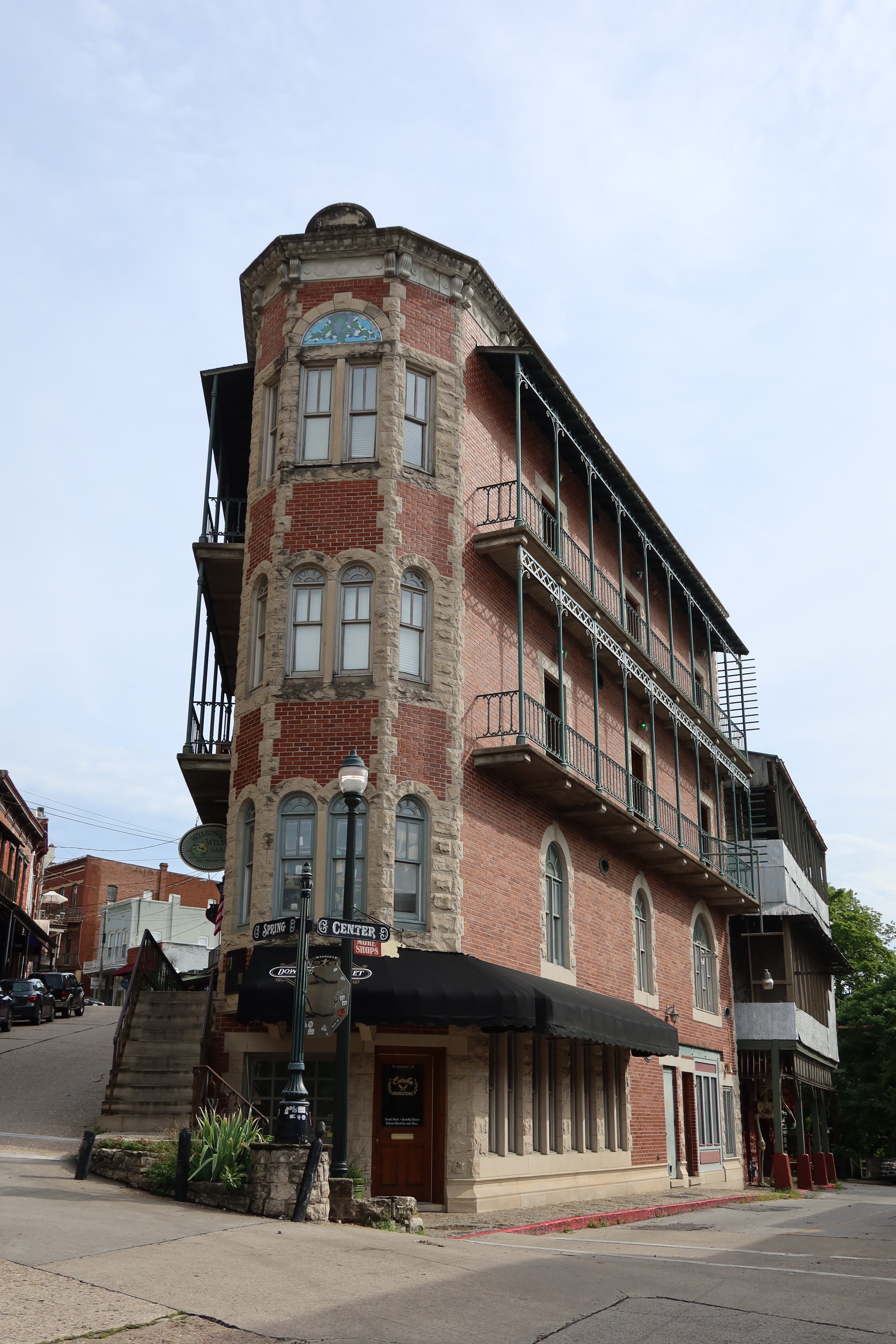
9.) Pig Trail and Eureka Springs
Route 23 south to Ozark (81 miles) gives you a representative slice of the natural beauty of northwest Arkansas. Sweeping turns, climbs, and wide pavement make this a real pleasure. Eureka Springs is an interesting little town with a lot of great food and 19th-century history. Cons: The route is close to Branson, Missouri.
10.) U.S. Route 1 between Sebastian and Palm Bay, Florida
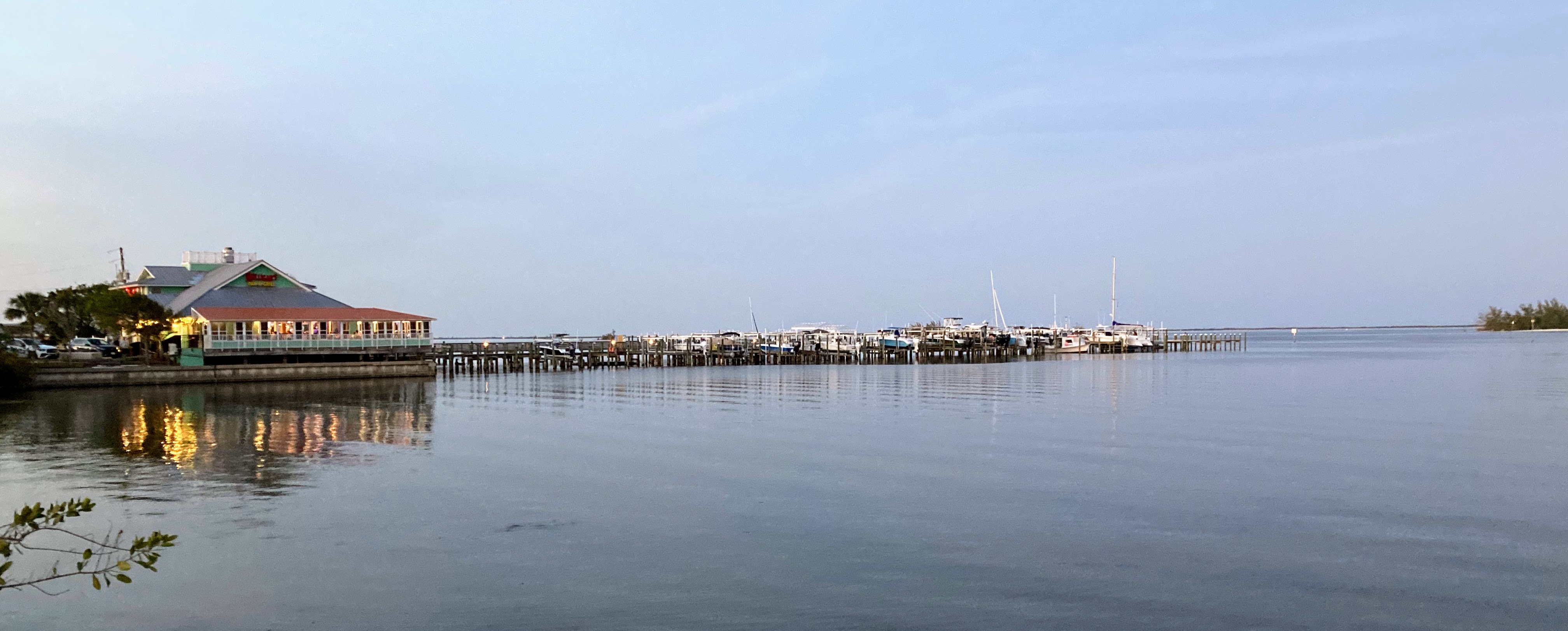
So here is my local plug—one spectacular 20-mile stretch of highway that I get to ride every week. Route 1 follows the banks of the Indian River lagoon with almost uninterrupted views of the Pelican and Barrier Islands. There are several great watering holes along the way to break up the ride. It was the last 20 miles of “The Big One” and an appropriate conclusion to end the trip.
 What Next?
Leave a comment